Do You Really Need SSL? Why the Padlock Matters


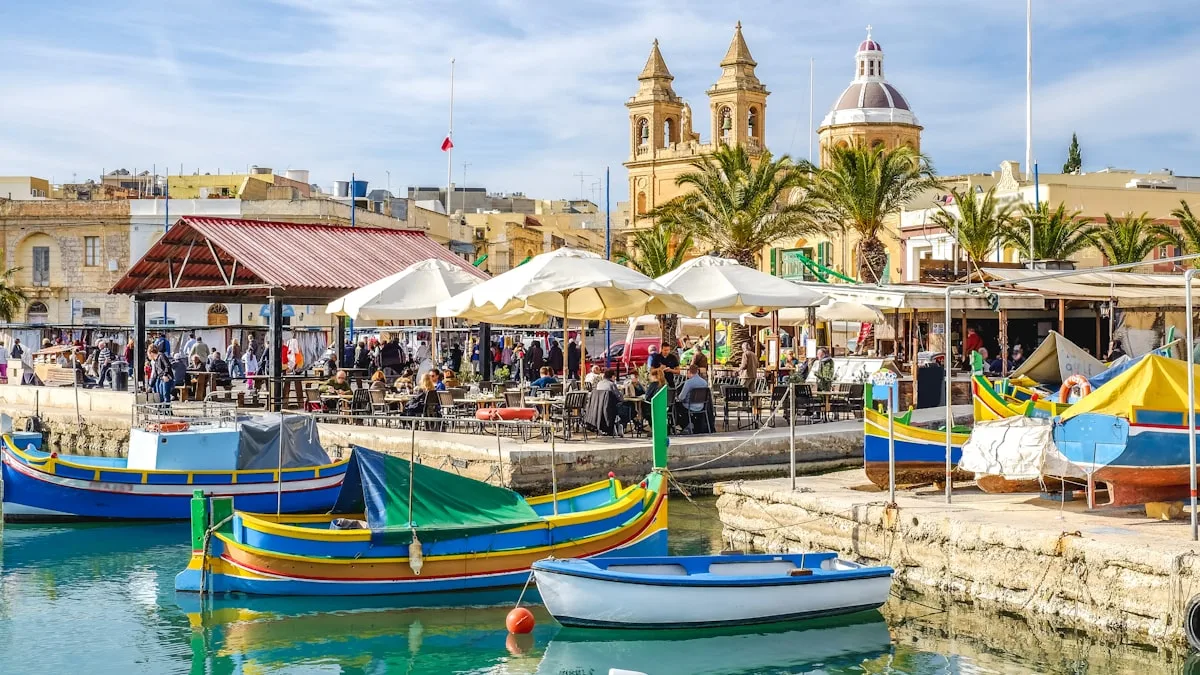
There’s a particular frustration that comes with running a guesthouse in Gozo — you know the place is special, your guests leave glowing reviews, and yet come January, when people start planning their summer holidays, your booking calendar stays stubbornly quiet. The instinct is to blame the season, or the competition, or the fact that Malta’s bigger island gets all the attention. But quite often, the real problem is simpler and more fixable: tourists simply can’t find you.
That’s not a reflection of your hospitality. It’s a visibility problem. And visibility problems, fortunately, have practical solutions.
Gozo has a quietly devoted following. Travellers who’ve been once tend to come back — drawn by the unhurried pace, the limestone villages, the dive sites off Dwejra, the kind of quiet that’s increasingly hard to find in the Mediterranean. Word of mouth works well here. The problem is that word of mouth has a ceiling, and it doesn’t scale when you need to fill rooms in late May or early September.
Online search, by contrast, reaches people who’ve never heard of your guesthouse and might not even know Gozo exists. These are exactly the guests you need more of — and right now, there’s a reasonable chance you’re invisible to them.
Most guesthouse owners, when they think about SEO at all, think about their own name. “People will search for us if they know us.” That’s true, but it misses the point entirely. The guests you want to attract don’t know your name yet. They’re typing things like “small hotel in Gozo with pool” or “guesthouse near Xlendi” or “quiet accommodation Gozo for couples.” Those are the phrases that matter — and if your website doesn’t reflect that language, you won’t appear.
Spend twenty minutes thinking through how a first-time visitor to Gozo might describe what they’re looking for. Write those phrases down. Then look at your website and count how many times those phrases — or close variations — actually appear. If the answer is “not many,” that’s your starting point.
A website that looks beautiful on a designer’s screen can be quietly catastrophic from a search perspective. Large image files slow loading times. Pages with minimal text give search engines very little to work with. Navigation that made sense to the person who built it may confuse both visitors and crawlers. These aren’t abstract technical concerns — they have a direct effect on whether your site appears when someone searches for accommodation in Gozo.
Check your page titles and meta descriptions. These are the small snippets of text that appear in search results — they’re often the first thing a potential guest reads. If yours say something like “Home — Gozo Guesthouse” rather than “Boutique Guesthouse in Victoria, Gozo — Quiet Rooms, Sea Views, Free Parking,” you’re wasting the opportunity to tell someone exactly why they should click on you.
Mobile performance matters enormously too. A significant portion of travel searches happen on phones. If your site is slow or difficult to navigate on a small screen, people will simply leave — and search engines notice that behaviour.
If you haven’t claimed and properly filled out your Google Business Profile, do it this week. Not eventually — this week. When someone searches for accommodation in Gozo, Google often shows a map pack of local businesses before any organic results. If you’re not in that pack, you’re missing a significant slice of intent-driven traffic from people who are actively ready to book.
A complete profile includes accurate opening information, a detailed description with relevant keywords, a consistent address and phone number, high-quality photos updated regularly, and — critically — responses to every review. Responding to reviews signals to Google that your listing is actively managed, and it signals to potential guests that you’re attentive. Both matter more than most people realise.
There’s a reasonable argument that a small guesthouse doesn’t need a blog. But there’s an equally reasonable counter-argument: content is how you appear in search results for questions your guests are already asking. “Best time to visit Gozo.” “Things to do near Marsalforn.” “Is Gozo worth visiting for a week?” These are real searches, and they represent real people in the planning stage of their holiday — exactly when you want to be on their radar.
You don’t need to publish something every week. A handful of genuinely useful, well-written pieces — your honest take on the quieter beaches, a practical guide to getting around without a car, a seasonal overview of what Gozo looks like in October — can attract consistent traffic long after you’ve written them. The key word is “genuinely useful.” Thin content written purely to tick an SEO box tends to be ignored by both search engines and actual human beings.
Booking.com and similar platforms have their place. They provide visibility and handle some of the booking infrastructure, which is useful when you’re running a small operation without a dedicated reservations team. But they take a commission on every booking, they own the guest relationship, and they give you very little control over how your property is presented.
The goal, over time, should be to shift more bookings to your own website — where you keep the margin and build a direct relationship with the guest. That doesn’t mean abandoning OTAs, but it does mean investing in your own online presence so that guests who discover you on a platform can find you independently when they book again, or when they tell a friend.
Here’s where many guesthouse owners get caught out: SEO takes time. Not months of vague effort, but real months — typically three to six before meaningful improvements in search rankings become visible. That means if peak season is July and August, starting to work on your online visibility in June is already too late. The groundwork needs to be laid in winter, when bookings feel distant and the motivation to invest in anything feels low.
The quieter months are not wasted time. They’re when you fix the website, update the Google profile, write a few considered pieces of content, and audit what’s actually working. Small, consistent improvements compound over time in ways that a last-minute push simply cannot replicate.
Gozo isn’t short on charm. The island does a great deal of the selling on its own, for anyone who’s been there or seen a photograph taken at golden hour over the Cittadella. The visibility gap isn’t about the product — it rarely is with small, independent guesthouses that have clearly been loved into existence. It’s about making sure the right people can find the product in the first place.
Fix the basics — search-informed content on your site, a properly maintained Google profile, a mobile experience that doesn’t frustrate people — and you create the conditions for the good word to travel further. The question worth asking, honestly, isn’t whether your guesthouse deserves more guests. It probably does. The question is whether you’ve made it genuinely easy for those guests to find you before they book somewhere else.
If you would like any guidence on how to move your business forward, Mediamatic has the necessary skillset to help you manage your business more efficiently and more profitably. if you would like some assistance, please dont hesitate to contact us.
From website management to small loads to help support your growth, we are happy to advise and help where we can. Get in touch to start your no-obligation consultation!