Do You Really Need SSL? Why the Padlock Matters

Most people treat a domain name like a formality ; something you pick in five minutes before moving on to the “real” work of building a website. That’s a mistake. The domain name you choose is, in many ways, the first thing your business says to the world. And for a Malta-based business operating in a market that’s both small and remarkably connected to the wider European economy, that first impression carries more weight than most people realise.
So let’s think this through properly ; what a domain name actually is, what makes one choice better than another, and why getting this right from the start saves a great deal of headache later.
A domain name is the human-readable address people type into a browser to reach your website. Behind the scenes, every website lives on a server with a numerical IP address;something like 185.220.101.42. Domain names exist because humans are considerably better at remembering words than strings of numbers. Your domain translates into that IP address automatically, invisibly, every time someone visits your site.
The domain itself has two main parts. Take acmeplumbing.com.mt as an example. “Acmeplumbing” is the second-level domain ; the unique part you register and own. “.com.mt” is the top-level domain, or TLD, which signals something about the nature and location of the business. The TLD is often where businesses in Malta face their first real decision.
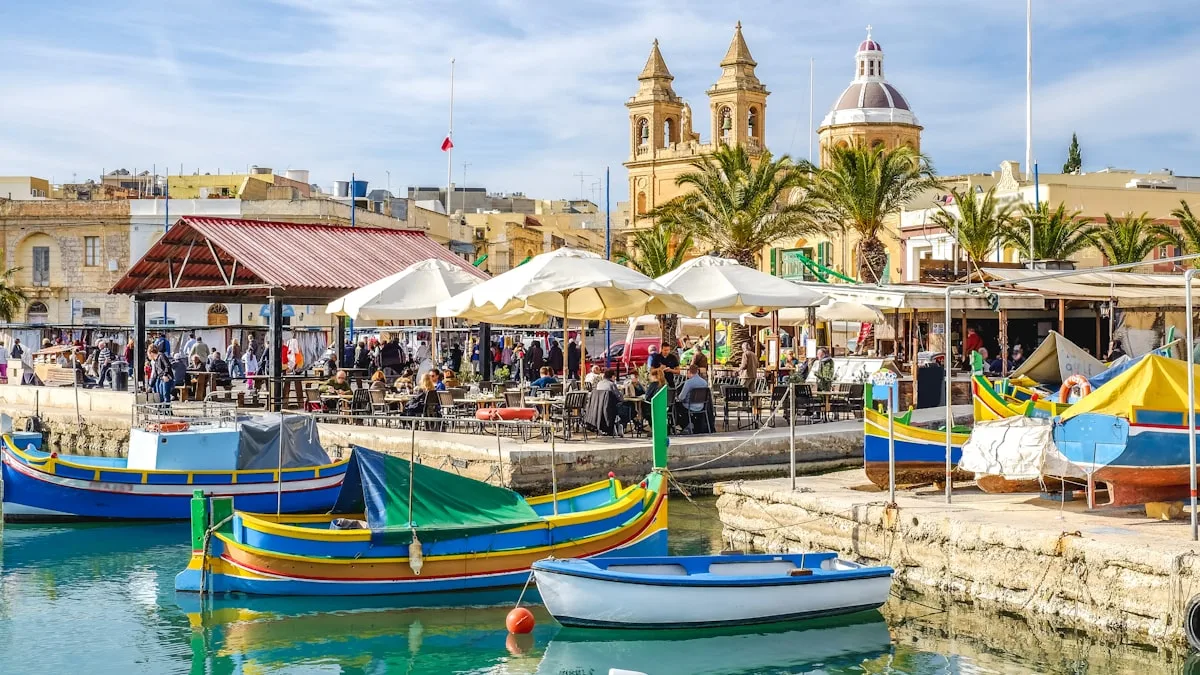
Malta has its own country code top-level domain: .mt, with common variants like .com.mt for commercial businesses and .org.mt for organisations. Registering a .com.mt domain sends a clear geographical signal; this business is Maltese, it operates locally, and it’s embedded in the island’s regulatory and commercial environment. For businesses whose customers are primarily in Malta, that signal is genuinely useful.
But there’s a tension worth sitting with. If your Malta-based business also serves clients in Italy, the UK, Germany, or elsewhere in the EU;as many do, particularly in sectors like iGaming, financial services, tourism, and e-commerce;a .com.mt extension can quietly limit how you’re perceived internationally. Some foreign users still associate country-code domains with purely local operations. Whether that’s fair or not is beside the point; it’s the reality you’re working within.
A plain .com domain, on the other hand, carries no geographical baggage. It’s the default expectation for international audiences. Some Maltese businesses opt for both ; registering the .com.mt for local credibility and the .com for international reach, redirecting one to the other. That’s not overthinking it. That’s sensible coverage.
The actual words in your domain name do real work. They affect how easy your address is to share verbally, how memorable it is after a single encounter, and ; to a modest but measurable degree ; how search engines categorise what your site is about. A domain like maltapropertylawyers.com tells Google something fairly explicit about relevance. That’s not a licence to stuff keywords awkwardly into a domain, but it does mean the name deserves careful thought.
Shorter names are generally easier to type correctly, especially on mobile. Hyphens cause confusion ; people forget to include them or misplace them entirely. Numbers in domain names create ambiguity (is it the digit “4” or the word “four”?). These aren’t rigid rules, but they’re patterns worth respecting unless you have a compelling reason to deviate.
There’s also the question of brandability versus descriptiveness. A domain like nexavia.com is invented, distinctive, and entirely ownable as a brand. A domain like maltaaccountants.com is descriptive but harder to build a unique identity around. Neither is categorically better ; it depends on your strategy. A niche services firm competing on local search may benefit from descriptiveness. A business planning long-term brand recognition might prioritise something more original.
Before you fall in love with a name, check whether it’s actually available ; and not just as a domain. A domain being available to register doesn’t mean you’re free to use it commercially. If the name you’ve chosen closely resembles a registered trademark, you could find yourself in an uncomfortable legal position down the line. This is particularly relevant in Malta, where businesses operating in regulated sectors like financial services and gaming are already operating under scrutiny.
Run a quick trademark search through the European Union Intellectual Property Office (EUIPO) database. Check whether the name is active on social media platforms you plan to use. Look for phonetic similarities, not just exact matches ; courts have found infringement in names that sound alike even when they’re spelt differently. This takes an hour at most and can save an enormous amount of trouble.
Also consider: what does this name look like as a single string? Before you register exchangerates.com, consider how it reads without spaces. Some domain names become inadvertently amusing or inappropriate when compressed. It happens more often than people expect, and it’s the sort of thing that gets noticed by everyone except the person who registered it.
Changing a domain name after you’ve built a business around it is genuinely painful. You lose accumulated search engine authority, inbound links from other websites, and the muscle memory of existing customers who’ve bookmarked or saved your address. Email addresses change too ; which means updating stationery, email signatures, client records, and every platform where you’ve registered with that address. It’s not insurmountable, but it’s disruptive and time-consuming in a way that a little early thought would have prevented entirely.
There’s also the reputational dimension. Frequent rebranding ; even for legitimate strategic reasons ; can make a business look unstable or indecisive to clients who notice. In Malta’s business community, where professional networks are tight and word travels quickly, that perception has consequences.
The domain name isn’t just a technical detail. It’s the address your business will carry, potentially for decades. It shapes first impressions, informs search visibility, anchors your brand identity, and either supports or complicates your long-term growth depending on how thoughtfully you chose it.
Treat it with the same seriousness you’d give your company name ; because increasingly, for most of the people who’ll ever find you, it is your company name. The question worth sitting with before you register anything: in five years’ time, when your business looks quite different from how it looks today, will this name still fit?
If you would like any guidence on how to move your business forward, Mediamatic has the necessary skillset to help you manage your business more efficiently and more profitably. if you would like some assistance, please dont hesitate to contact us.
From website management to small loads to help support your growth, we are happy to advise and help where we can. Get in touch to start your no-obligation consultation!